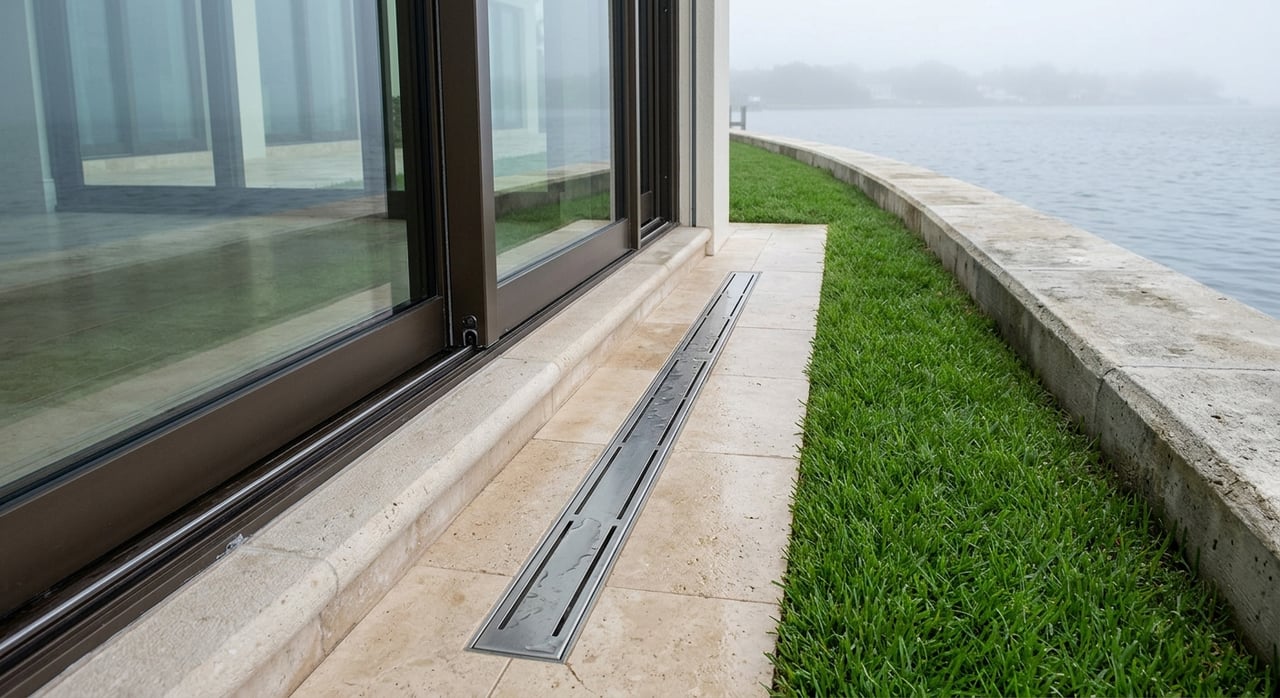
Thinking about transforming a La Gorce Island property? On this part of Miami Beach, the biggest question is often not just what you want to build, but what the site will actually allow. Between zoning, flood elevation rules, review pathways, and waterfront permitting, a renovation or rebuild can shift quickly from a design exercise to a full entitlement strategy. This guide walks you through the key issues to verify before you commit time, capital, or expectations. Let’s dive in.
Start With Site Reality
On La Gorce Island, you should not assume the development path based on the neighborhood name alone. Miami Beach directs property owners and buyers to confirm parcel zoning on the city zoning map before planning any renovation, expansion, or rebuild.
That first step matters because the zoning district shapes the project envelope, including lot coverage, unit size, setbacks, and height. If you skip that verification early, you can spend months designing a home that does not fit the actual rules for the parcel.
You should also confirm whether the home is in a local historic district, is individually designated historic, or has been determined to be architecturally significant. Each of those conditions can change the review path, affect demolition options, and alter what may be permitted on the site.
Understand the Basic Single-Family Envelope
Miami Beach’s single-family zoning materials provide a useful baseline for what may be possible. For a two-story home, the city shows a maximum lot coverage of 30% and a maximum unit size of 50%.
Height is also a major factor, especially on a low-lying coastal island. In general, Miami Beach measures height from base flood elevation plus freeboard, and homes in single-family districts generally may not exceed two stories above that benchmark. The exact cap still depends on the specific district and parcel, which is why parcel-level review is essential.
If you are hoping to make a home substantially larger, the answer is usually yes only within the approved zoning envelope or through a specific incentive or approval path. In other words, the lot may support a meaningful improvement, but not an unlimited one.
Bigger Homes Can Trigger More Rules
As massing increases, design review can become more complex. Miami Beach’s zoning data sheet flags additional front-façade and side-elevation step-back calculations once lot coverage reaches 25% or more.
That means the question is not just how much square footage fits on paper. The form of the house can also affect whether the design complies and how long approvals may take.
Lot Aggregation Has Limits
Some buyers look at adjacent parcels and assume they can combine multiple lots to create a larger estate footprint. Miami Beach limits lot aggregation in single-family districts to no more than two contiguous lots, with only narrow exceptions.
For underwriting purposes, that means assemblage potential should be verified carefully. On a high-value island lot, assumptions about future scale can materially affect pricing and project feasibility.
Flood Elevation Can Reshape the Entire Plan
La Gorce Island sits within a city that openly identifies its vulnerability to flooding from heavy rainfall, high tides, storm surge, and sea-level rise. Because of that, flood compliance is not a side issue. It is central to whether a project remains a renovation or effectively becomes a rebuild.
Miami Beach’s flood code defines minimum freeboard as one foot and maximum freeboard as five feet. In flood hazard areas, the city generally requires new residential construction and substantial improvements to elevate the lowest floor to the higher of the city benchmark, the crown of road or sidewalk plus one foot, or base flood elevation plus minimum freeboard.
For owners of older homes, that rule can have major design and budget implications. A house that looks like a candidate for a straightforward remodel may require a much more extensive scope once current elevation requirements are applied.
When a Renovation Crosses Into Rebuild Territory
Miami Beach states that a project can enter substantial-improvement territory when work and or damage exceed 50% of the building market value. When that threshold is crossed, the lowest floor must meet current elevation requirements.
This is one of the most important issues to evaluate before purchase or before finalizing a renovation budget. If the existing structure sits too far below current standards, a major remodel can trigger obligations that make a ground-up strategy more practical.
Know the Approval Path Early
One of the most common questions on La Gorce Island is whether you can renovate without a board hearing. Sometimes yes. Miami Beach says single-family homes that fully comply with zoning and design requirements may be administratively approved.
More complex projects often require additional review. If the proposal involves waivers, variances, or an understory, Design Review Board approval is required. If the property is in a local historic district or is individually designated historic, total demolition requires Historic Preservation Board approval at a public hearing.
For architecturally significant homes, there may be an incentive path that increases maximum unit size to 60% of lot area and lot coverage to 40%, with reduced setbacks and administrative review. That status is not the same as historic designation, so it needs to be evaluated separately.
Timing Matters More Than Many Buyers Expect
Miami Beach planning states that applications are generally scheduled for hearing in roughly three to four months, depending on completeness. Board approvals are generally valid for 18 months.
That timeline can be just as important as the construction budget. If you are acquiring a property with plans to renovate or rebuild, the expected approval path should be part of your upfront decision-making, not an afterthought.
Waterfront Work Brings Another Layer
If the property includes shoreline improvements, a dock, a boatlift, davits, dredging, seawall work, or mangrove trimming, you should expect a separate permitting track. In Miami-Dade County, work in, on, over, or upon tidal waters or coastal wetlands requires a Class I permit.
For Miami Beach properties, the city’s residential marine checklist also requires preliminary approval from DERM and structural plans showing property lines, the face of seawall, the seawall cap, and the dock with elevations. Some marine projects may also require Planning Board approval before building permit submittal.
This is why waterfront improvements should be treated as a marine-engineering and environmental-permitting exercise, not just a contractor add-on. On an island property, the house and the shoreline often have to be evaluated together.
Dock and Seawall Constraints Are Real
Miami Beach code limits many docks, boat slips, and wharves so they do not extend into a canal or waterway by more than 10% of the width of the waterway, or 15% where the waterway is more than 100 feet wide, subject to the code’s dimensional cap.
Florida coastal construction law also requires a coastal construction permit for seawalls and related shore-protection work. State law further provides that permits to repair or replace an existing vertical seawall will generally require riprap facing or replacement unless an exception applies.
For owners planning a major residence upgrade, this can become a major line item in both schedule and cost. If the seawall is near the end of its useful life, it should be reviewed early alongside the house itself.
Build the Right Team From the Start
The safest sequence for a La Gorce Island renovation or rebuild usually starts with zoning-map verification, then survey and elevation-certificate review, followed by a flood-code screen. If the project may involve waivers, an understory, historic review, or marine work, a pre-application meeting can help clarify the path.
You will usually want the right specialists involved from the beginning, including:
- A surveyor for a recent signed-and-sealed survey, topographic information, and elevation data
- An architect or land-use planner for zoning analysis, lot coverage, setbacks, unit size, and height calculations
- A structural engineer for new construction, additions, and marine structures
- A coastal or marine engineer and environmental reviewer for docks, seawalls, dredging, or shoreline stabilization
- An arborist or landscape consultant for required tree survey, tree disposition, landscape, and irrigation materials
In a market like La Gorce Island, this kind of preparation is not excessive. It is how you reduce risk before making expensive commitments.
Expect a Documentation-Heavy Process
Miami Beach’s single-family planning checklist is detailed, and that is important to understand upfront. Depending on the project, the city may require a recent signed-and-sealed survey, building plans, base flood elevation and grade elevations in NGVD or NAVD values, floor plans, roof plans, section drawings, a tree and vegetation survey, a tree disposition plan, landscape plans, irrigation plans, and a future adjusted grade.
The zoning data sheet also calls for base flood elevation, adjusted grade, lot area, lot width, lot coverage, unit size, roof-deck area, and building height calculations. If waterfront improvements are involved, the marine package adds another layer of technical submittals.
For buyers, this means due diligence should include more than visual inspections and contractor opinions. A disciplined acquisition review should test zoning, flood exposure, entitlement path, and shoreline conditions together.
Why Due Diligence Matters on La Gorce Island
On a premier waterfront island, design ambition is easy. Execution is harder. The homes that pencil cleanly are usually the ones where zoning, elevation, approvals, and marine conditions were understood before closing or before final design.
That is especially true when you are comparing renovation against new construction. Sometimes preserving the structure makes sense. Sometimes current flood standards, approval timelines, and shoreline needs point toward a more comprehensive rebuild strategy.
If you are evaluating a La Gorce Island property, the smartest move is to treat entitlement and flood analysis as part of the investment thesis. That approach helps you protect time, capital, and expectations from day one.
If you are considering a purchase, renovation, or rebuild on La Gorce Island, The Corcoran Group can help you evaluate the property through a disciplined waterfront lens, with senior-level guidance tailored to the realities of Miami Beach island ownership.
FAQs
Can you renovate a La Gorce Island home without a board hearing?
- Yes, sometimes. Miami Beach says single-family homes that fully comply with zoning and design requirements may be approved administratively, but projects involving waivers, variances, or an understory typically require Design Review Board approval.
Can you substantially enlarge a home on La Gorce Island?
- Possibly, but usually only within the zoning envelope for the parcel or through a qualifying incentive or approval path. Lot coverage, unit size, height, and design calculations all affect what can be built.
Does a major renovation in Miami Beach trigger new elevation requirements?
- It can. Miami Beach says that if work and or damage exceed 50% of the building market value, the project may be treated as a substantial improvement and the lowest floor must meet current elevation requirements.
Do seawall or dock improvements on La Gorce Island need separate permits?
- Usually yes. Miami-Dade County requires a Class I permit for many types of work in tidal waters or coastal wetlands, and Miami Beach may require additional city review and marine permit documentation.
What should you verify first before rebuilding on La Gorce Island?
- Start by confirming parcel zoning on the city zoning map, then verify whether the property has historic or architecturally significant status, and review survey and elevation information before design work advances.
How long can Miami Beach approvals take for a complex residential project?
- Miami Beach planning says applications are generally scheduled for hearing in about three to four months depending on completeness, and more complex projects may require multiple department reviews before permit issuance.